Aktion T4 and the Holocaust
Today’s post is near and dear to my heart. It is a great example of the disabled community being silenced as almost no one has been taught about the Aktion T4 program. The T4 program was a political mass murder campaign by involuntary euthanasia, which ended up serving as the precursor to the Holocaust. The history that I’ve compiled for this week is, and should be, shocking. As such, I feel that I need to put a warning here that this post will talk about some of the horrendous things that occurred before and during WWII which include: mass murder, eugenics, abortion, forced sterilization, assisted suicide, and the torture of children. I encourage readers to decide for themselves if they would like to engage in this material.

The early 1900s was a dark time for those with disabilities. In addition to facing discrimination in employment, education, architecture, it was also the age of eugenics. This meant that scientists and politicians were trying to shape the human race by eliminating undesirable characteristics. Those with disabilities were especially targeted. In America, new laws passed such as the “ugly laws” which prohibited the appearance of people who were “diseased, maimed, mutilated, or in any way deformed, so as to be an unsightly or disgusting object (1).” Another example is sterilization laws, which allowed disabled people to be sterilized against their consent. America was not the only country to do this. Sterilization laws were also in effect all over Europe. In the Deaf community, oralism (communicating by voice rather than by sign language) was enforced. Deaf teachers were fired while deaf students were punished if they signed. American Sign Language was nearly wiped out of existence. Alexander Graham Bell, largely known for creating the first telephone, used his fame to push for laws that would prohibit Deaf people from marrying or having children.
The purpose behind these laws was to further segregate disabled people from non-disabled people. In addition, they pushed disabled people to fit into the status quo. This discrimination and segregation—particularly the sterilization laws—inspired scientists and political leaders in Germany, who were also heavily discussing Darwin’s ideas of natural selection and survival of the fittest.

In support of these ideas, the Nazi party began producing propaganda that blamed Germany’s social and economic problems on people with disabilities. Anyone who didn’t contribute to the well-being of the society was considered a burden to the point they were called “lives unworthy of living (2).” After the propaganda, came action.
In 1933 the “Law for the Prevention of Hereditary Diseased Offspring” was passed and lead to forced sterilization of people carrying hereditary defects, which was anything from mental illness to deformations to sensory disabilities such as deafness or blindness to biracial children. Many who were sterilized were children, who often did not know what the operation meant until years later. You can hear a few of these victims tell the story in their own words here.

After this, more action came with the registration of disabilities. Political leaders wanted to know how many people with disabilities were in nursing homes, being born in hospitals, and living at home. It became required for doctors, midwives, and nurses to report this information. Once that information was gathered, Aktion Tiergartenstrasse 4 (T4) began. In a nutshell, the T4 program was a campaign of mass murder of people with disabilities. It began in 1939 with the quiet killing of infants and children under the age of 3 who were suspected of having a hereditary disability. Parents did not have a say in their child’s future. If they fought the decision of the doctors, their baby was taken away.
When WWII broke out, T4 expanded to older children, adults, and the elderly with disabilities. Disabled people were being trafficked to special “institutions” and “special sections” where it was believed that they would receive better treatment. In reality, they were being sent to various places to be slaughtered. These were the first instances of mass murder in Germany and, of course, needed to be undertaken secretly. This meant there was a need to develop new technology to kill several people at a time and provide a way to efficiently dispose of the bodies. That’s how gas chambers were invented and why furnaces became the top method of disposing of bodies.

The Nazi party kept T4 secret. Most parents who dropped their children or family members off at these institutions didn’t know they were delivering them to the arms of death. While most adults had the mercy of being killed quickly, for children it was a different story. Children were often locked in rooms and either starved or beaten until dead. Those with mental illnesses were sometimes kept for experiments. One particular doctor, Heinrich Gross, would preserve the brains of disabled children in jars for further studies. He is credited with killing more children than any other doctor under the T4 program and has never been formally charged for these crimes.
I am sad to say that Gross’s victims were not laid to rest until April 28, 2002. Gross kept their brains as part of his collection of study and research, continuing to dissect their brains as late as 1998. (3)
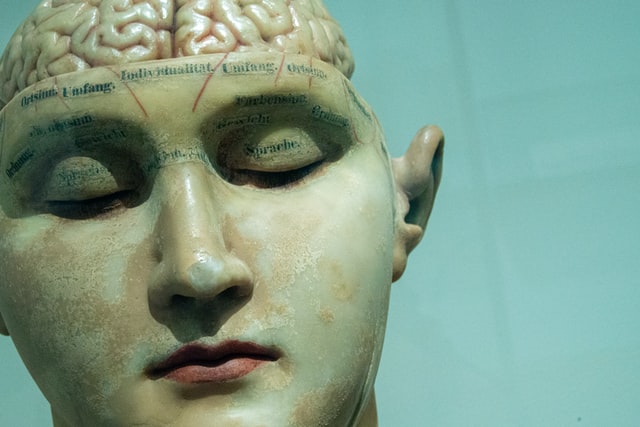
After the success of the T4 program, the Nazi party turned to target Jews, Blacks, Transgender, Homosexuals, interracial couples, and many others. With the new technology developed under the T4 program, they had the means to do mass exterminations the likes of which had never been seen before.
T4 continued through the war until Germany surrendered to Allied powers on May 7, 1945. The last murder of the program took place on May 29, 1945. It was a boy named Richard Jeene who was four years old and classified as a “feebleminded idiot” (4). While the exact number of people who were killed under T4 isn’t known, estimations range from 200,000 to 360,000 (5).

Had the T4 program been prevented or failed, it is likely the Holocaust would never have come to past. From this history, we can see how when one group successfully justifies the extermination or discrimination of another group, there will always be another group to target. Because the disabled community is one of the most invisible and oppressed minorities on the planet, it is not uncommon for them to be the first target.
Unfortunately, discussions about disabilities and eugenics continue to this day. As an example, many believe that disabilities need to be cured or eradicated. Abortion laws around the world often allow fetuses who have been diagnosed with disabilities to be terminated at much later dates than allowed for a non-disabled fetus. This assumes that children with disabilities will have a lower quality of life or be too much of a burden. Another example, some groups are pushing for assisted suicide for disabled people, which would allow someone with a disability to legally seek out voluntary euthanasia. This arises from assumptions that people with disabilities are so miserable that they want to die. This particular issue strikes a personal nerve because I spent most of my childhood wishing I was dead. And then I grew up and I learned about disabilities and the barriers in place that made me feel that way. I developed pride in myself and my disability. I overcome those feelings and now I can’t imagine wanting to die. Assisted suicide is not an answer until we first break down the barriers that prevent disabled people from being fully integrated into society.

A third example is found in efforts of trying to cure disabilities similarly has a mindset that disability makes a person less useful. Whereas focusing on accessibility and building better technology for disabled people focuses on breaking down barriers. If disabilities are completely eradicated we stand to lose so much diversity and innovation. Instead of assuming that disabilities need to be wiped out or that they are a burden, maybe society should look at the barriers that keep people with disabilities from contributing. Instead of saying “people with disabilities are burdens” try saying “what barriers prevent people with disabilities from contributing to society? How can we challenge or remove these barriers?”
One of the reasons I started this blog was to combat the persistent negative views surrounding disabilities. Disabled people are often seen for their disability rather than as people, but we are people first, foremost, and forever. As a nation and as a global village, we are entering into a new age. As I’ve mentioned before, I am part of the first generation of the disabled community, worldwide, to grow up with civil rights. This means that disabled people are no longer segregated from non-disabled people and we are in the process of becoming a more visible community. Perhaps a better way to explain this is with a quote from Judy Heumann’s book.
“We were a people who were generally invisible in the daily life of society. I mean, think about it. If you didn’t see us in school, because we weren’t allowed in; or in your place of employment, either because we couldn’t physically access it or because we couldn’t get hired; or on your form of public transportation, because buses and trains weren’t accessible; or in restaurants or theaters, for the same reason—then where in your everyday life would you have seen us?”
Being Heumann, Page 103

When I first learned about the T4 program a couple of years ago, I felt like I had been betrayed. Why hadn’t I been taught this in school? Why wasn’t everyone taught about it? We learn about the Holocaust in detail, but nothing about how it came to be. It seemed like such an important detail to leave out. Isn’t that why we learn history? So we recognize the signs if it starts happening again? The T4 program assumed that life can be measured by usefulness while further assuming only able-bodied persons were useful, a stereotype that persists today. I have to wonder if disabilities and eugenics would still be under discussion if more people were educated about T4. Things like selective abortion are not too far off of the beginnings of the T4 program. It is discrimination. It is a matter of life and death. It is important to understand and recognize these things before they escalate into something bigger. Something more terrible.
Something that should never be silenced.
References
- Schweik, Susan M, and Robert A Wilson. “Ugly Laws.” The Eugenics Archives, 5 Feb. 2015, eugenicsarchive.ca/discover/tree/54d39e27f8a0ea4706000009.
- Cook, Ian. “The Holocaust and Disabled People: FAQ – Frequently-Asked Questions.” Ouch!, BBC, 17 Oct. 2008, http://www.bbc.co.uk/ouch/fact/the_holocaust_and_disabled_people_faq_frequently_asked_questions.shtml.
- Erlanger, Steven. “Vienna Buries Child Victims Of the Nazis.” The New York Times, 29 Apr. 2002, http://www.nytimes.com/2002/04/29/world/vienna-buries-child-victims-of-the-nazis.html.
- Krausz, Tibor. “You Were Born to Die for Germany.” Tibor Krausz, The Jerusalem Report, 28 Nov. 2005, tiborkrausz.com/html/book_review/You_were_born_to_die_for_germany.html.tiborkrausz.com/html/book_review/You_were_born_to_die_for_germany.html.
- Berenbaum, Michael. “T4 Program.” Encyclopædia Britannica, Encyclopædia Britannica, Inc., 21 Feb. 2001, http://www.britannica.com/event/T4-Program.



 Listen Up